


I had the honor of attending the 64th Annual Veterans Day Observance in Bethesda this week. As always, it was a moving event, with flags fluttering, school bands playing, politicians speaking, and elderly veterans waving gamely.
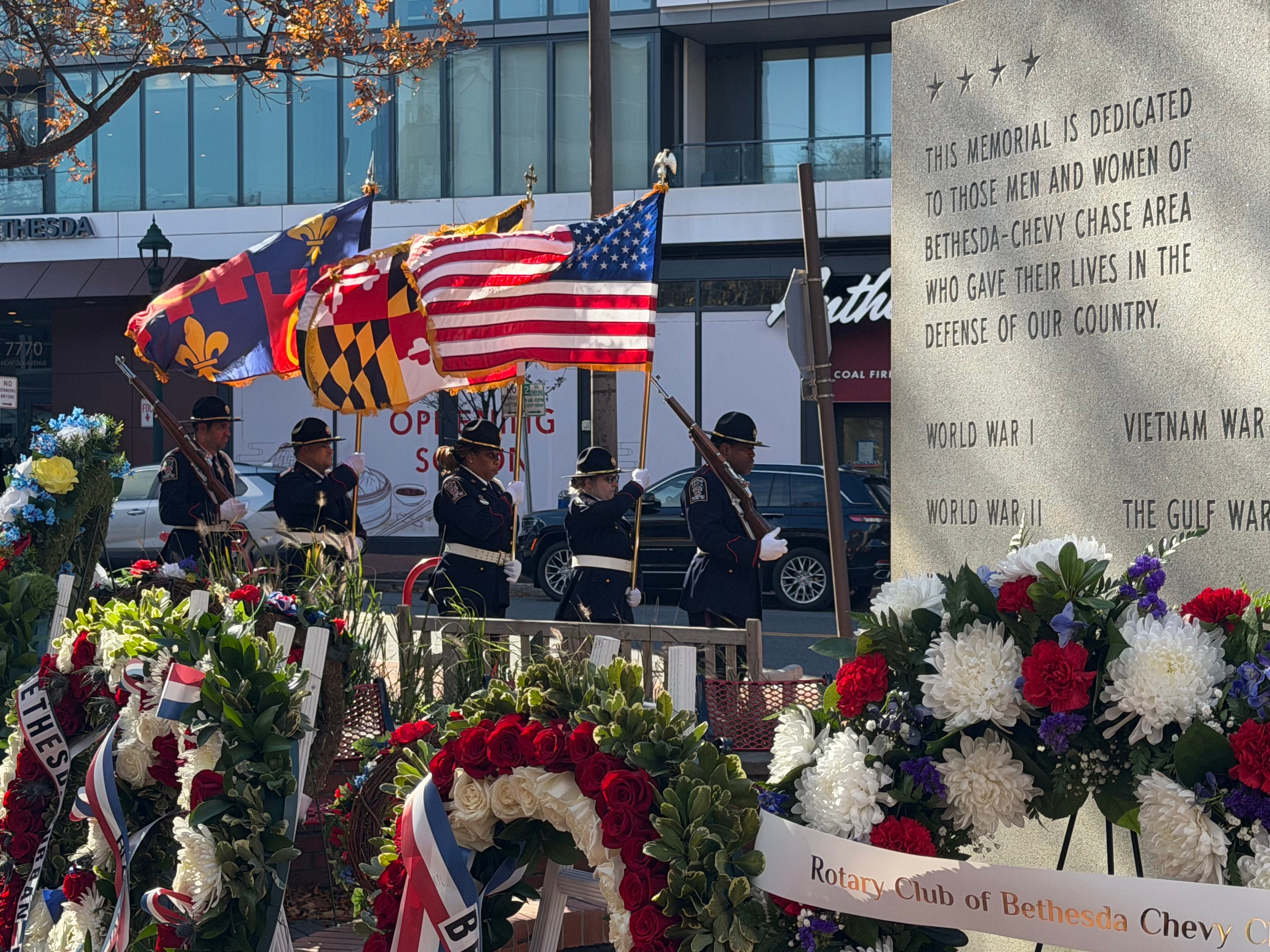
Also as always, I was on the lookout for communications messages, and I found two in the ceremony:
The Washington Nationals are thriving.
We’re doomed.
Perhaps I should elaborate.
First, the Nats. From 1971 to 2005, Washington lacked a baseball team after evildoers stole the Senators away — not once, but twice. In response, Washington baseball fans turned to the Baltimore Orioles, who were not only nearby, but had actually had a World Series victory in living memory.
Washingtonians became loyal Orioles fans, learning to shout “O’s!” during the Star-Spangled Banner at the line, “O, say does that star-spangled banner still wave…”
But this year, we proceeded through the National Anthem with no Orioles shout-out, which tells me that the Nats have fully subsumed the market. Good branding, well done, Nats!
Second, as to the dooming, I saw a concerning shift in messaging from the speakers and some of the attendees.
For instance, one speaker, after suggesting that no one sees Veterans Day as much of a holiday anymore, then thanked the crowd for showing up.
Really? Is that where we are? People who turn up for an hour once a year to commemorate the sacrifices that have secured our freedom for 250 years need thanks now? That’s a mighty low bar even for political limbo.
But maybe Veterans Day has always had image problems. It started back in 1918, when, on the 11th hour of the 11th day of the 11th month, World War I ended. Marking the occasion, President Woodrow Wilson said:
“Out of this victory there arose new possibilities of political freedom and economic concert. The war showed us the strength of great nations acting together for high purposes, and the victory of arms foretells the enduring conquests which can be made in peace when nations act justly and in furtherance of the common interests of men.” — Woodrow Wilson at the White House, November 11, 1919
Lofty ideals to launch the commemoration, sure, but Congress still didn’t get around to making it a legal holiday until 1938.
Then things took an interesting turn. President Dwight D. Eisenhower changed it to “Veterans Day” in 1954 to honor the service of all veterans, not just the 4.7 million Americans who fought in World War I.
It’s easy to look at that change as political pandering — not only was Eisenhower a World War II five-star general himself, but the shift created a national day of recognition for the 16 million Americans who fought in World War II and the 1.8 million who fought in Korea. That’s a tidy way to honor more than a quarter of the 62 million people who voted in the 1952 presidential election.
But I think it was more than that. Eisenhower was crafty about rebranding to create messages that responded to Cold War rhetoric and shaped the fast-growing Baby Boomer cohort.
On June 14, 1954 — just 13 days after Congress approved the legislation turning “Armistice Day” into “Veterans Day,” — it passed Eisenhower’s proposal to add “Under God” into the Pledge of Allegiance. The next year, he had them add “In God We Trust” to all American currency.
Eisenhower was quietly undertaking a full-scale civic repositioning. Gone were Wilson’s “high purposes,” “common interests,” and “great nations acting together.” Under Ike, we had personal faith and virtue with life in the fast lane and electricity too cheap to meter.
But today? Faith and virtue are gone, and waving a flag for an hour merits a public “participation medal.” We say “thank you for your service” to everyone from a decorated veteran to a barista handling a morning rush.
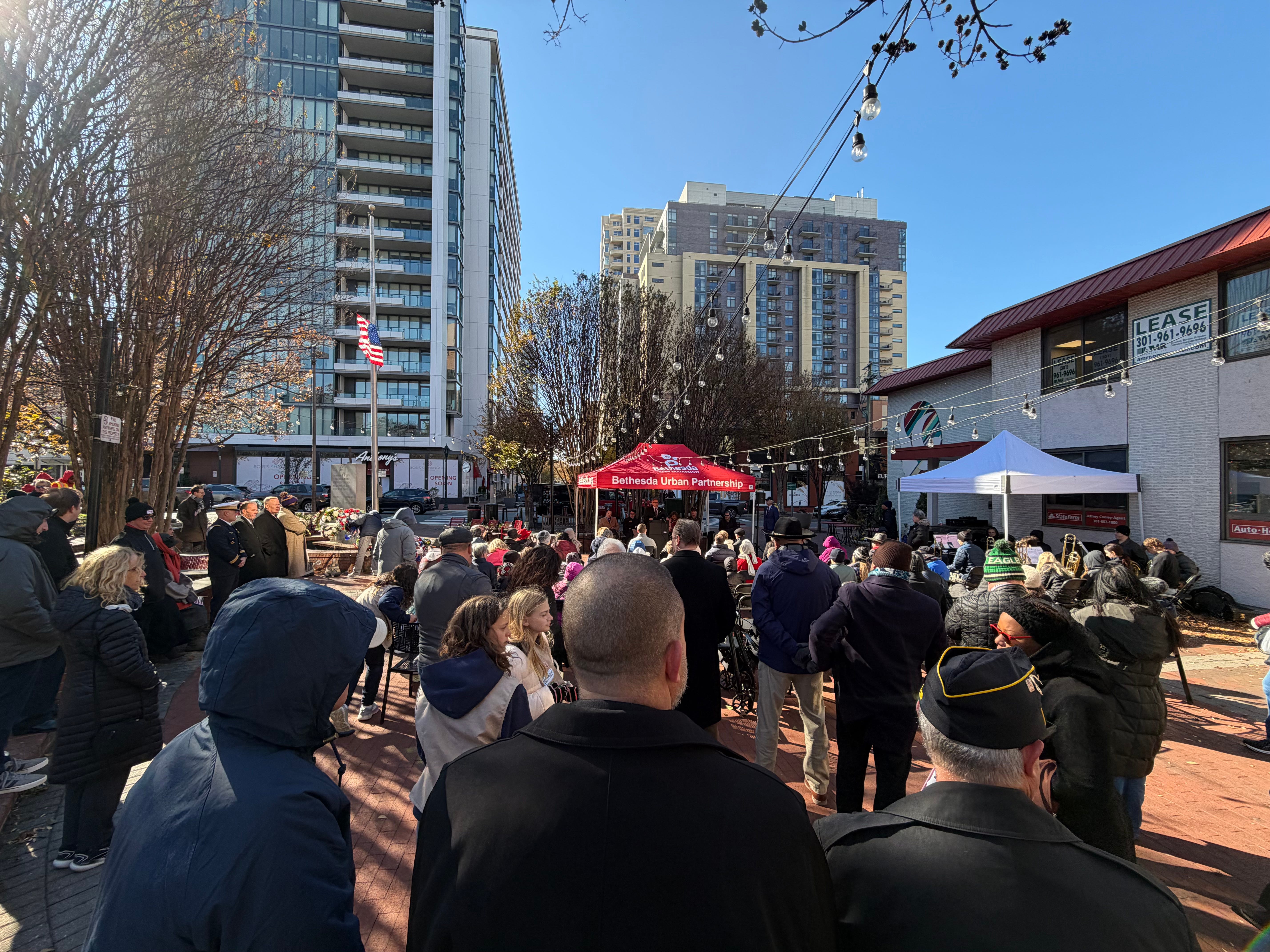
And those public officials who wonder if Veterans Day is actually a holiday? I can’t blame them. Despite remaining a legal federal holiday, that status is a little shaky. For instance, in bureaucratically pixilated Montgomery County: Government? Closed. Schools? Open. Buses? Sunday schedule. Parking? Holiday schedule.
Something for everyone. Except the veterans.
You see, just as Wilson’s high ideals vanished under Eisenhower, Veterans Day itself seems to be disappearing now.
It’s a shame to see a century of durable civic branding failing, but “thanks for your service” anyway. “Thoughts and prayers” to future generations.
You’ll need them.
You’re doomed.
Go Nats!
I'm always slightly amused when people thannk me for my service. As a Vietnam era veteran, thanks were not generally what we received at the time.
I confess I didn't even know it was Veterans' Day until it was almost over. My father, born in 1920, was the youngest of 7 kids. Two boys and two girls served in the armed forces during WW2; one was killed in France, and two others served in the Red Cross or civil service. Only one of the women became involved in remembrance events. So while I saw many photos and heard the stories, being a participant was remembered as a grim part of our past, not to be celebrated.